
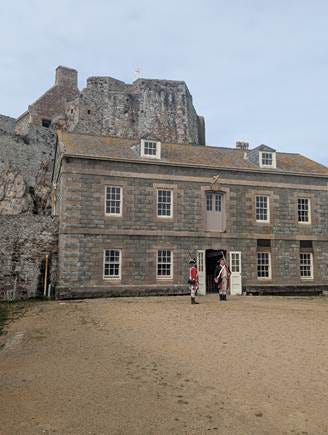
Some castles are elusive, hidden away in the secret folds of a landscape or demurely clothed within a group of trees or a forest. Others are domineering and overtly rampant, sited and built to be seen from miles away on all sides. Some are in ruins; some are on their way to ruin; others are being renovated or restored and revived, whether piecemeal or in flamboyance.
There are castles in various stages of dereliction or revival everywhere in Europe, from Ireland to Albania and from Poland to Portugal. Surviving castles and related buildings provide the most obvious signs of Europe’s cultural legacy, stone-clad evidence of another and different life centuries ago, one that now seems incredible to modern researchers. Castles bring to mind war and aggression more than peace, privilege more than equality, servitude more than freedom. But they are also records of ingenuity, endurance and a persistent human desire to build heritage and mark the landscape.

Across Europe, castles were built chiefly for the purpose of control, attack, and defence in battles. From the earthworks and timber palisades of the early Middle Ages to the great stone keeps, curtain walls and concentric defences of later centuries, their sites were almost never accidental. They guarded a river crossing, commanded a road, watched a frontier, or reminded those nearby of their proprietor and landord and demonstated the power to defend or exploit the land. As kingdoms expanded and borders shifted, castles formed a collective network of individual strongholds through which rulers imposed authority. Their towers and walls tell a history not only of architecture and warfare, but also of taxation, law, ownership and the gradual formation of European states, as well as the rise and fall of their fortunes.
Yet castles were also workplaces and homes. Within their walls people cooked, worshipped, loved, negotiated, administered estates, entertained, and raised children. Some were more small towns than garrisons or prisons. Great halls displayed wealth and hierarchy; chapels expressed Christian faith; storerooms, kitchens, stables and workshops sustained communities.
Over time, narrow defensive windows widened, austere chambers acquired fireplaces, furniture, and painted decoration. Fortified residences evolved into palaces designed as much for comfort and ceremony as for survival. Every alteration revealed changing expectations: the lordly landowner who once needed an impregnable refuge later required an impressive setting in which to govern, and demonstrate taste or wealth.

The influence of castles extended far beyond their gates. All, once, were local hubs. Settlements gathered beneath their protection, markets prospered under charters granted by their owners, and roads were redirected towards them. They became administrative centres which managed forests, farms and villages, and their fortunes determined those of an entire district, or even region. Even after gunpowder weakened their military value, many remained powerful social and economic landmarks. Many were atop hills and acted as land-lighthouses. Some were adapted as country houses, prisons, barracks, or government buildings; others were quarried for stone and disappeared into local houses, walls, road markers, and streets. Their material survival, or disappearance, formed part of the lives of ordinary people and their activities.
Castles are also settings for legends of siege and betrayal, for romances, ghost stories and national delusions. Their ruins invite us to imagine what time has removed, while their restored rooms can allow us to believe that the past is not so distant.
This confection should not conceal the realities on which many castles depended: inherited privilege, forced labour, military aggression and huge inequalities of wealth and freedom. To value these buildings honestly is to acknowledge both the truths and the mutual inconsistencies. We can admire the skill of their builders and designers, gaze at the beauty of their settings and the panoramic views from their interiors, while still recognising the violently divisive systems of power they represented and enforced.

Castles now offer a rare experience; a tangible connection between long spans of history and the landscapes of everyday life. They remind us that buildings survive only through repeated acts of will and choice. A revived castle may support local employment, education, tourism and celebration, but it also asks for immense patience, tolerance, money, and devotion. The people who accept that burden become the latest custodians in a chain stretching back centuries, adding their own chapter without ever owning the story.